Altos de Lircay National Reserve: the complete travel guide from Talca
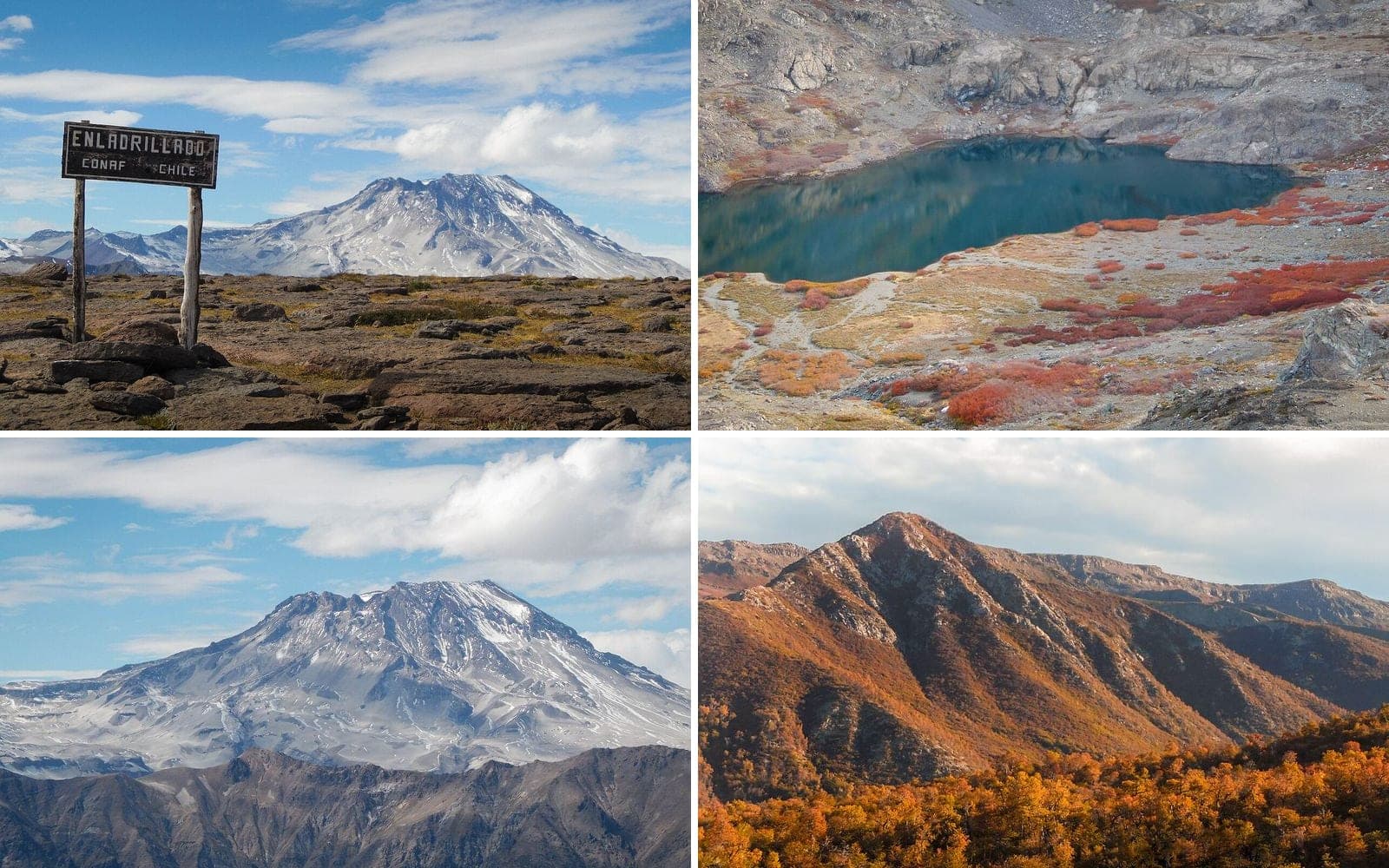
About 70 kilometers east of Talca, past San Clemente and up toward the Andes, lies one of the most striking landscapes in central Chile: the Altos de Lircay National Reserve. Forests of southern beech, condors gliding over the ridges, a high-altitude lake and, at the very top, El Enladrillado, a rock plateau so flat and orderly that it looks hand-built, with the Descabezado Grande volcano in the background. For many people in Talca it is the mountain outing par excellence; for visitors from elsewhere, a strong reason to stay one more day in the region.
In this guide to the Altos de Lircay National Reserve we bring together what you need to plan your visit from Talca: how to get there by car or bus, which trails there are and how long they take, fees, opening hours, where to camp and what to bring. We checked the information in October 2026 against what CONAF, the agency that manages the reserve, publishes, but hours, prices and trail closures change with the season and the weather, so always confirm them before you set off.
What the Altos de Lircay National Reserve is
The Altos de Lircay National Reserve was created on June 11, 1996, and protects 12,163 hectares of Andean foothills and mountains in the municipality of San Clemente, Talca province. It takes its name from the Lircay River, which rises in these heights and flows down past the north of the city. The reserve entrance sits at about 1,360 meters above sea level and its trails climb to more than 2,200 meters, so in a single hike you go from humid forest to high-altitude steppe.
The reserve is a refuge for the plants and wildlife of central Chile. According to CONAF, its forests are home to several Nothofagus species, such as hualo, roble, coigüe, ñirre, raulí and lenga, along with mountain cypress and a wide variety of ferns and wild orchids. Animals include pumas, culpeo foxes, viscachas, lesser grisons, kodkods and colocolo cats, and among the birds are the burrowing parrot (tricahue), the austral parakeet (cachaña), eagles, the peregrine falcon and the Andean condor. With a little patience you can often hear the Magellanic woodpecker drumming on the forest trunks.
How to get to the Altos de Lircay National Reserve from Talca
By car the drive is straightforward and paved all the way to Vilches Alto. From Talca take Route 115-CH toward San Clemente and the Pehuenche Pass; after about 40 kilometers comes the turnoff to Vilches, and from there it is roughly 29 more kilometers uphill to the Vilches Alto area and the reserve entrance. That is about 70 kilometers in total, and the trip usually takes a little over an hour. Fill up in the city before heading up: you can see where gasoline is cheapest in our fuel price comparison for Talca.
If you don't have a car, rural buses leave the Talca Bus Terminal (platform 24) for Vilches and take about two hours to climb. There are several departures a day, but schedules change between weekdays, weekends and high season, so confirm them at the terminal before you travel, especially if you plan to return the same day. Keep in mind that in winter the last few kilometers of road can have snow, and that across much of the area the cell signal is weak: download offline maps before you leave.
Trails in the Altos de Lircay National Reserve
CONAF divides the reserve's trails into short and long ones. The short trails are ideal with children or for a half-day visit: Aliwenmahuida (900 meters, one hour, easy), Los Concones (600 meters, 45 minutes, easy), Río Lircay (2 kilometers, 90 minutes, moderate), Cerro El Peine (4 kilometers, three hours, moderate) and Mirador del Río. Entry to the short trails is allowed until 3:30 p.m.
The long trails are what made the reserve famous. El Enladrillado (11 kilometers, about nine hours round trip) climbs through the forest to a large rock plateau at about 2,200 meters, made of fractured blocks that look like bricks, with views of the Descabezado Grande volcano and Cerro Azul. Laguna del Alto (14 kilometers, about eight hours, demanding) leads to a high-altitude lake at about 2,000 meters, surrounded by rock and shrubs that turn red in autumn. There are also the Mirador Valle del Venado lookout (11 kilometers, eight hours) and the crossing to Valle del Venado (20 kilometers, nine hours, very difficult). Entry to the long trails closes at 10:30 a.m., so arrive early.
An important note: CONAF closes the long trails in winter because of snow and for safety. In 2026 they had been closed since July 4 until further notice, while the short trails reopened in September. Before planning the climb to El Enladrillado or Laguna del Alto, check on the Pases Parques website whether they are open.
Fees, opening hours and camping at Altos de Lircay
The reserve is open Tuesday to Sunday until 5:30 p.m. Tickets are bought online on the official Pases Parques website, and in 2026 they cost CLP 4,500 for adults and CLP 2,800 for young people aged 13 to 17; children under 12, seniors and people with disabilities get in free. Fees are updated from time to time, so confirm the price when you buy.
To stay longer there is Camping Antahuara, whose name means "sun of the mountain", about 800 meters from the administration. It has cold-water showers, a cooking area and picnic tables, but fires are not allowed and nothing is sold on site, so bring everything from Talca. If you prefer a bed, the Vilches area has cabins and family-run lodgings, and in the city there are plenty of options in our Tourism and Lodging in Talca category.
When to visit the Altos de Lircay National Reserve and what to bring
The best time to visit the Altos de Lircay National Reserve is from spring to autumn. From December to March the days are long and all the trails are usually open, although weekends are busier. Autumn, from March to May, is for many the most beautiful season: the beech forests turn red and yellow and the light is perfect for photography. In winter the snowy landscape is lovely, but the long trails close and access can be difficult.
What to bring: enough water (at least two liters per person for the long trails), food, sunscreen and a hat, because the high-altitude sun burns; layered clothing and a windbreaker, since the wind on the plateau is cold even in summer; hiking shoes or boots, poles if you use them, a basic first-aid kit and bags to carry all your trash back down. For camping, add a sleeping bag rated for low temperatures and a gas stove, the only way of cooking that is allowed.
Tips for visiting Altos de Lircay responsibly
Altos de Lircay is a protected area, and its beauty depends on every visitor doing their part. CONAF prohibits lighting fires (except authorized gas stoves), bringing pets, leaving the marked trails, removing plants, stones or animals, flying drones without authorization, making loud noise, smoking and drinking alcohol inside the reserve. Taking your trash back to Talca is the simplest rule and the most important one.
Safety matters too. Stop by the CONAF administration before starting a trail, tell someone your route, check the forecast and don't climb to the plateau in bad weather: at altitude the weather changes fast. In an emergency, the numbers on our useful information page for Talca, such as the police (Carabineros, 133), the fire department (132) and ambulance (SAMU, 131), work from any phone with signal. For questions before your trip you can contact CONAF Maule at 4 Norte 1673, Talca, by phone at +56 71 222 4461 or by email at talca.oirs@conaf.cl.
In short, the Altos de Lircay National Reserve is the great natural treasure near Talca: forests, condors, high lakes and a plateau unlike any other in Chile, a little over an hour from the city's main square. To combine it with other outings, see our guide to tourism in Talca and the Maule Region and our ideas for weekend plans in Talca. And for more tourist information about the region, visit the Sernatur Maule Region office at 1 Oriente 1150.
Francisco Javier Morales
Founder of Talca Conecta
You may also be interested in
Restaurants and bars in Talca for a special dinner
From traditional grills to bars serving Maule wines: here's what to look for in Talca restaurants and bars so your next special dinner is a success.
By Francisco Javier Morales
Hair salons and barbershops in Talca: 2026 trends
Cuts, color and hair treatments: we look at the trends shaping hair salons and barbershops in Talca in 2026, and how to choose well before your next appointment.
By Francisco Javier Morales
The best gyms and sports centers in Talca
Gyms, swimming pools and sports complexes: here are the options for working out in Talca, how to choose well and what to ask before signing up.
By Francisco Javier Morales